
21-22.10.2026
Kyiv, Ukraine-
Hanover, Germany
(online)

#OSIU2026
OSIU2026 is a platform for presenting and discussing research, initiatives, and practical case studies related to the implementation of open science and innovations. The forum covers a wide range of topics — from research policy development and infrastructure creation to service provision supporting open science and building a sustainable ecosystem through human capacity development. Special attention is given to the practical aspects of implementing openness principles in science, technology, and innovation.
About the Conference
The State Scientific and Technical Library of Ukraine, in collaboration with TIB — the Leibniz Information Centre for Science and Technology University Library, and with the support of the Ministry of Education and Science of Ukraine, invites you to participate in the Fifth International Conference "Open Science and Innovations in Ukraine 2026", to be held on October 21–22, 2026 in online format. The event will take place as part of International Open Access Week 2026.
The Fifth International Scientific Conference "Open Science and Innovations in Ukraine 2026" aims to strengthen dialogue among stakeholders on the effective implementation of open science in Ukraine. Key conference topics include the development of national research infrastructure, reform of research evaluation systems, ensuring open access to scientific outputs, open research data, research reproducibility, and the role of citizen science in developing Ukraine's innovation ecosystem.
All topics align with the National Action Plan on Open Science and the Roadmap for Ukraine's Integration into the European Research Area, making the conference an important element in advancing national scientific reforms. In addition, dedicated panels address innovations, academic publishing, and the dissemination of EU best practices in digital resources and skills development.
The conference will serve as an open space for professional exchange of experience, ideas, and best practices. It creates an opportunity for cross-sector and interdisciplinary dialogue among researchers, policymakers, infrastructure representatives, innovators, and policy developers. Expected outcomes include strengthened collaboration, the formation of new partnerships, and the development of a shared vision for integrating Ukrainian science into the European Research Area through open science and innovation mechanisms.

Target Audience
We warmly invite: researchers and scholars, postgraduate students and early-career scientists, university and research institution leaders and staff, institutional repository administrators, IT specialists, publishers and members of scientific journal editorial boards, developers of research information platforms and systems, project managers, business leaders, and start-up co-founders, librarians working on open research practices and infrastructure development.



Conference panels
- Development and support of national research infrastructure in the context of Ukraine's integration into the European Research Area
- System of national, thematic, multidisciplinary and institutional repositories of publications and research data
- National, regional and institutional electronic scientific information systems. The URIS system
- Development of a network of shared-use scientific equipment centres
- Open access and open science: challenges of the time. OA policies at institutional, funder and national levels
- Quantitative and qualitative methods for responsible evaluation of scientific research. Ukrainian peer-reviewed journals: a reboot. Diamond Open Access
- Artificial intelligence in the research lifecycle: AI in research, academic writing and peer review
- Science popularization and mediatization. Open bibliometrics. Measuring non-academic impacts
- FAIR principles for research data and research information
- Research data management practices
- Benefits of implementing persistent identifiers for researchers and institutions
- The data management specialist — a demand of the times
- Implementation of EU open science directives into national legislation
- Effectiveness of transparency mechanisms in research activities
- Ethical challenges of using big data and artificial intelligence in research
- Institutional research ethics committees: best practices in risk management
- Identifying and managing conflicts of interest. International instruments
- Conceptual foundations: intellectual property and open science
- Contractual models of open access and licensing. Creative Commons licences
- Monographs and open access. Legal regime of research data
- Artificial intelligence and open science: legal challenges
- Building a startup ecosystem as a driver of innovative development and economic growth
- Mechanisms for the development of science parks. Science.City legal framework
- Technology transfer and research commercialisation support offices
- COST Association: expanding horizons for Ukrainian researchers and innovators
- Mechanisms and instruments for accelerating innovative activity under Horizon Europe
- Developing digital competencies among researchers, educators and students
- Open digital educational resources and platforms (OER)
- International cooperation in digital infrastructures: the "Ukrainian National Coalition StartAid Ukraine" project
Registration
To participate in the conference, you must fill out the participant form
Deadline for registration - October, 15, 2026

Publication of Conference Proceedings
All abstracts approved by the Conference Program Committee for registered participants with reports will be published in the electronic collection "Open Science and Innovation: Proceedings of the Annual Conference" (ISSN 3083-7243). Each article is assigned a unique DOI index. Publication in the conference collection is free of charge.
Speakers
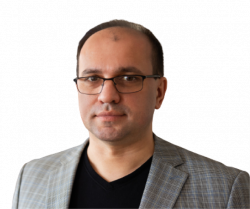
Denis KURBATOV
Deputy Minister, Ministry of Education and Science of Ukraine
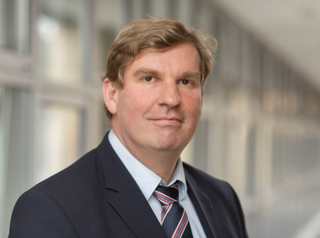
Sören AUER
Director TIB - Leibniz Information Centre for Science and Technology and University Library, Head of research group Data Science and Digital Libraries
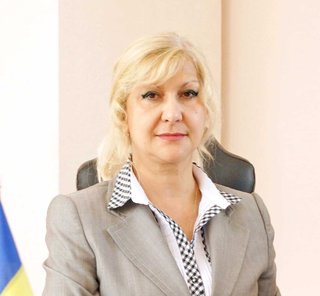
Dr. Alla ZHARINOVA
Acting Director, State Scientific and Technical Library of Ukraine

Iryna KUCHMA
EIFL Open Access Programme Manager
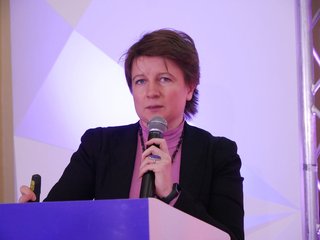
Iryna TYKHONKOVA
Customer Success Consultant Clarivate

Serhiy ZHARINOV
head of unit, State Scientific and Technical Library of Ukraine
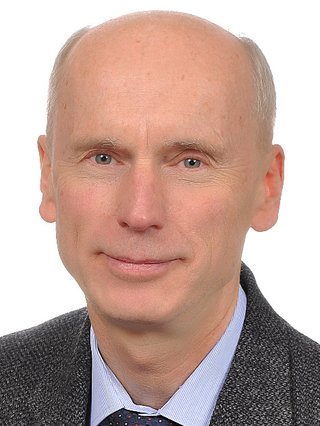
Yurii KAPITSA
Director, Center for Intellectual Property Studies and Technology Transfer, National Academy of Sciences of Ukraine

Petr KNOTH
Head of CORE, Big Scientific Data and Text Analytics Group
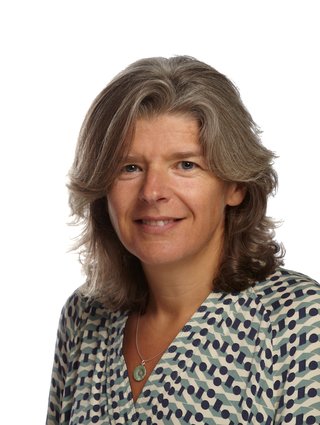
Joanna BALL
DOAJ (Directory of Open Access Journals), Managing Director
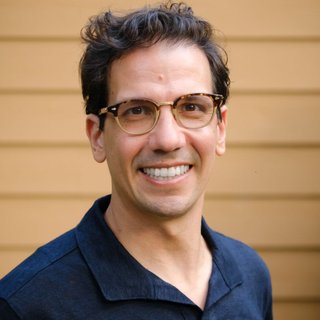
Juan Pablo ALPERIN
Associate Professor in the Publishing Program, Co-Director of ScholCommLab and Research Lead of the Public Knowledge Project (PKP), developer of Open Journal Systems, Simon Fraser University, Canada
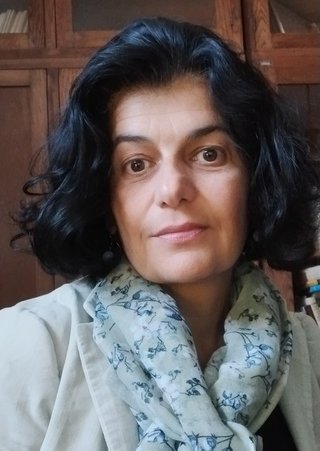
Milica ŠEVKUŠC
Project Coordinator at EIFL and Librarian at the Institute of Technical Sciences of the Serbian Academy of Sciences and Arts (Belgrade, Serbia)

Jessica LINDVALL
Deputy Head of Node for ELIXIR-Sweden at Stockholm University and a member of the Board of Directors of the EOSC-Association.
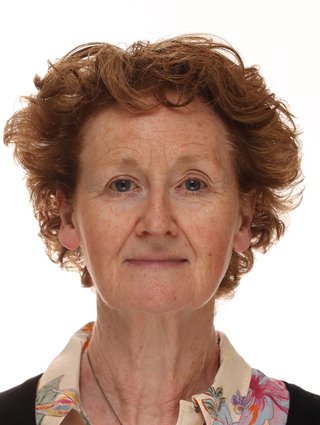
Teresa HACKETT
EIFL Copyright and Libraries Programme Manager

Amanda FRENCH
Technical Community Manager at the Research Organization Registry (ROR) and a project leader working at the intersection of scholarly communication and digital humanities

Alison FERRETT
Account Manager for Southern, Central and Eastern Europe at Elsevier

Jessica LINDVAL
Deputy Head of the ELIXIR-Sweden node at Stockholm University and a member of the Board of Directors of the EOSC Association (European Open Science Cloud Association)

Monica GRANDOS
Director of Open Science at Creative Commons, She leads the Creative Commons Open Science team, working with researchers, librarians, consortia, policymakers, and other stakeholders involved in scholarly communication and the implementation of Creative Commons licensing.
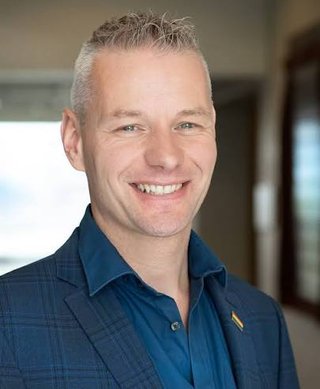
Joeri BOTH
Chair of the OpenAIRE Executive Board, Deputy Director of the University Library of Vrije Universiteit Amsterdam (the Netherlands)

Iryna IZAROVA
Doctor of Law, Professor at Taras Shevchenko National University of Kyiv, Chair of the Commission on Publication Ethics of the Ministry of Education and Science of Ukraine, member of the Council of the Committee on Publication Ethics (COPE), Co-Chair of the Regional Chapters Committee and member of the Council of the European Association of Science Editors (EASE)
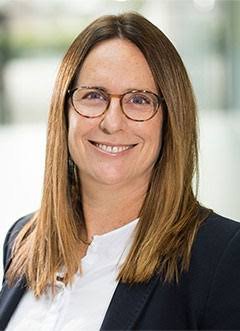
Verónica WILLMOTT PUIG
Doctor of Science, Alfred Wegener Institute, Helmholtz Centre for Polar and Marine Research, Germany, Doctor of Science, Interim Head of International Cooperation Unit, Alfred Wegener Institute, Helmholtz Centre for Polar and Marine Research, Germany. EU project POLARIN project Coordinator
Oleksandr BEREZKO
Co-founder and President of the Institute for Open Science and Innovation, Co-Chair of CoARA Chapter Ukraine, Project Lead of OPTIMA, Lviv Polytechnic National University

Michaela MILLER
Data Management Specialist, International Project Office of the Southern Ocean Observing System (SOOS); Institute for Marine and Antarctic Studies (IMAS), University of Tasmania, Australia
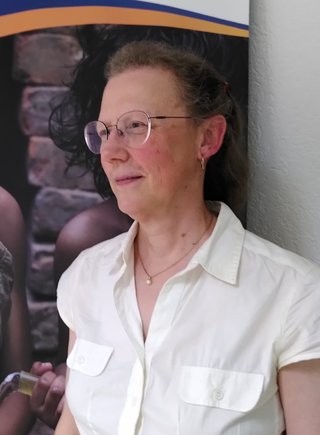
Kimberly PARKER
Hinari Programme Manager at the World Health Organization (WHO), Research4Life

Joachim SCHOPFEL
Honorary Professor of Information and Communication Sciences at the University of Lille (France), consultant on scientific and technical information, and member of the GERiiCO research laboratory

Peter RADVAK
Scientific researcher, Laboratory of Genomics and Bioinformatics, Science Park Comenius University Bratislava and a member of the team at the National Centre for Bioinformatics, Slovak Centre of Scientific and Technical Information
Conference Abstract Submission Requirements
Requirements for Submission and Publication in the Conference Proceedings
All abstracts approved by the Conference Programme Committee for registered presenting participants will be published in the electronic collection "Open Science and Innovations: Proceedings of the Annual Conference" (ISSN 3083-7243).
Each article will be assigned a unique DOI.
Publication in the conference proceedings is free of charge.
Only abstracts of papers presented at this conference are published, provided they are included in the programme (oral and poster presentations) and meet the formatting requirements.
Submission of manuscripts implies that they have not been previously published and are not currently under consideration for publication in any other journals or conference proceedings.
Manuscripts must be submitted electronically via the conference platform OR by email to [email protected] by 10 September 2026.
All materials are published under a Creative Commons Attribution (CC BY) license, which allows others to distribute, adapt, and use the work provided that appropriate credit is given.
Authors' rights: Authors retain their copyright without restriction. Authors are permitted and encouraged to post preprints and postprints of their works in institutional repositories or on specialised platforms. When distributing a postprint, a reference to the published abstract in the Proceedings is mandatory.
The conference proceedings adhere to international publication ethics standards. Ethical considerations apply to all participants in the publication process: authors, reviewers, and editors.
We support the FAIR principles (Findable, Accessible, Interoperable, Reusable): together with the manuscript, authors must provide (where possible) access to the underlying research data on which the conclusions are based. Data must be deposited in open repositories (e.g. Zenodo, Figshare, etc.) with a reference to them in the article text via DOI.
Formatting Requirements
The total length, including abstracts in Ukrainian and English and the list of references, must be 6–8 pages (15,000–24,000 characters including spaces). Format: MS Word (.doc/.docx), Times New Roman font, size 12, line spacing 1, margins 20 mm on all sides.
Conference abstracts are published in Ukrainian or English.
Each conference participant may be a co-author of no more than two articles.
Required Structural Elements
Abstracts must include the following minimum structural elements:
- Introduction — description of the problem, its relevance, a review of recent research and publications identifying the unresolved aspects, and the aim of the work.
- Methods — presentation of the main content with a description of the research methods and methodology, and justification of the results obtained.
- Results and Discussion — detailed presentation of the original research results and their analysis.
- Conclusions — key findings, recommendations, and prospects for applying the research results.
Formatting Guidelines
Author information: surname, first name and patronymic (initials), affiliation, city, country, email, and ORCID. Spacing: before — 0 pt, after — 12 pt. In both Ukrainian and English.
Please ensure your ORCID profile contains up-to-date information, including your name in English, current affiliation, publication record, etc.
Title — left-aligned (font: TNR 14 pt, bold, spacing after: 12 pt). In both Ukrainian and English.
Abstract (in a single paragraph, 100–150 words) — justified, structured in accordance with the logical flow of the article. Must include the following elements: aim, methods, results, conclusions. The abstract must not repeat the text of the article itself, its title, references, or abbreviations. Font: TNR 10 pt. Spacing after: 0 pt. In both Ukrainian and English.
Keywords (4–6 individual words and/or phrases) — justified. The words Keywords preceding the list are italicised; separator: semicolon; no full stop at the end of the list (font: TNR 10 pt, spacing after: 12 pt). In both Ukrainian and English.
Main text is provided in one language only: Ukrainian or English. It must be structured and contain the elements: Introduction, Methods, Results and Discussion, Conclusions. The manuscript text is justified. In-text references are formatted in APA style and appear in parentheses only, e.g. (Schmidt, 2025) or B. Schmidt (2025). Abbreviations must be defined at first mention and used consistently thereafter. Footnotes may be used to provide supplementary information and are numbered sequentially.
Acknowledgements of individuals, grants, funds, etc. should be placed in a separate section before the reference list. The full names of funding organisations must be written out in full.
In the case of research involving humans, animals, or their biological materials, an Ethics Committee (Bioethics Committee) approval must be provided.
Include information about research data if they are deposited in open repositories (e.g. Zenodo, Figshare, etc.), with a reference in the article text via DOI.
Tables: Tables must always be cited in the text in sequential order and numbered with Arabic numerals. For each table, please provide a table title describing its content.
Figures: All illustrations, including diagrams and photographs, are to be labelled as figures. Figures must be numbered sequentially and referenced in the text (Fig. 1). For each illustration, provide a caption with an appropriate description. Figures must have a resolution of 300 dpi. For charts created in Excel, please submit the original Excel file. Colour illustrations are accepted for electronic publication.
Reference list — APA style only, in Latin script. Ukrainian-language sources must be transliterated or translated into English with [in Ukrainian] indicated at the end of the reference. The reference list is presented in alphabetical order. All sources should include a DOI where available.
Illustration files are submitted as separate files in JPG, TIF, or XLSX format, with the location of each illustration clearly indicated in the article text. A list of illustrations is submitted in a separate Microsoft Word file.
Reference List Formatting Examples
Lindemann, T., & Häberlein, L. (2023). Contours of a research ethics and integrity perspective on open science. Frontiers in Research Metrics and Analytics, 8, 1052353. https://doi.org/10.3389/frma.2023.1052353
Yaroshenko, T. (2021). Open Access, Open Science, Open Data: How it Was and Where We are Going (To the 20th Anniversary of the Budapest Open Access Declaration). Ukrainian Journal on Library and Information Science, 8, 10–26. https://doi.org/10.31866/2616-7654.8.2021.247582 [in Ukrainian].
Ukrainska bibliotechna entsyklopediia. (2024). Sotsiokulturna diialnist bibliotek. Retrieved from http://surl.li/cnylej [in Ukrainian].
Programme Committee
Denys KURBATOV — Deputy Minister of Education and Science of Ukraine
Hryhorii MOZOLEVYCH — Director General of the Science Development Directorate, Ministry of Education and Science of Ukraine
Alla ZHARINOVA — Acting Director of the State Scientific and Technical Library of Ukraine
Iryna KUCHMA — Open Access Programme Manager, EIFL
Oksana BRUI — Deputy Director General of the Yaroslav Mudry National Library of Ukraine, President of the Ukrainian Library Association
Oleksandr BEREZKO — Associate Professor, Lviv Polytechnic National University; President and Co-Founder of the NGO "Institute for Open Science and Innovations"; Co-Chair of the National CoARA Hub in Ukraine
Volodymyr KOTSIUBYNSKYI — Head of the Department of Applied Physics and Materials Science, Doctor of Physical and Mathematical Sciences, Professor, Vasyl Stefanyk Precarpathian National University
Sören AUER — Director of TIB; Head of the Data Science and Digital Libraries Research Group, TIB — Leibniz Information Centre for Science and Technology University Library
Vadym TULCHYNSKYI — Doctor of Physical and Mathematical Sciences, Head of the Programming Automation Department, V. M. Glushkov Institute of Cybernetics of the National Academy of Sciences of Ukraine; Deputy Chair of the Scientific Council of the NAS Ukraine Centre for Scientific and Technical Problems "Implementation and Support of Open Science in NAS Ukraine Institutions"
Maria KRASNOSHCHOK, Consultant for the Development of the Innovation Ecosystem and International Cooperation in the Field of Science, Technology and Innovations, Ministry of Education and Science of Ukraine
Maria KUCHERUK, Head of the Consulting Department and Co-Founder of the Ukrainian Startup Association, Member of the Innovation Council at the Ministry of Education and Science of Ukraine
Appeal to Conference Sponsors
Sponsoring our conference means investing in Ukrainian science — and gaining direct access to a engaged community of researchers, scientists, and specialists from across Ukraine.By becoming a sponsor, you will:
- Raise your brand's visibility among a highly educated and professionally active audience
- Demonstrate your commitment to the development of science and innovation in Ukraine
- Build meaningful connections with leading researchers, academics, and industry experts
- Showcase your products or services to a targeted and receptive community
- Contribute to the growth of the Ukrainian scientific ecosystem at a critical time
We offer a range of sponsorship packages tailored to meet different goals and budgets, providing a variety of promotional and engagement opportunities throughout the event.If you would like to receive detailed information about our sponsorship packages or have any questions regarding partnership opportunities, please do not hesitate to contact the conference organizers by emailing: [email protected] or [email protected]
We look forward to welcoming you as a valued partner of our conference!
Contacts
80 Antonovycha Street, Kyiv, 03150, Ukraine
(“Lybidska” metro station)
Telephone in case of query: +38(044) 521-93-52
Phone: +38(044) 521-93-50
Conference website and registration: https://conference2026.dntb.gov.ua/
e-mail: [email protected]